Insights|
What is concierge medicine, and how does it compare with longevity medicine?

By Nick Arapis, CSCS, CMES, Chief Operating Officer, Optispan. Medically reviewed by Dr. Nicki Byrne, Medical Director.
Concierge medicine is a membership model of primary care. You pay a fee, your physician looks after fewer patients, and in return you get easier appointments, longer visits and more direct access to a doctor who knows your history.
If you’ve ever waited weeks for an appointment, felt rushed once you got one, or wished you could simply message your doctor, that model probably sounds appealing. Longevity medicine is getting attention for a different reason. The two overlap, but they answer different questions.
The way I separate them: concierge medicine is about how your care is delivered, and longevity medicine is about what that care is trying to achieve over the long term. Optispan is a concierge practice built around longevity medicine. We want clients to have real access to their physician, and we also want to help them understand where their health stands today, what their risks might look like decades from now, and what they can do to improve their odds of a longer, healthier life.
How concierge medicine works
Traditional primary care physicians often look after large patient panels, which limits how much time each patient gets. Concierge medicine handles this by capping the number of patients each physician sees and charging a membership fee to support the smaller practice.
Practices vary, but most offer some combination of:
- a smaller patient panel, so the physician has more time for each person
- longer appointments, with room to discuss concerns and review results
- same-day or next-day appointments
- direct contact with your physician by phone, email or secure messaging
- help with specialist referrals, chronic conditions and communication between providers
Some concierge practices still bill insurance for medical services and charge the membership separately. Others work entirely outside insurance.
What does longevity medicine add?
Longevity medicine starts with a different question. Alongside your health today, it asks what your health could look like 10, 20 or 30 years from now.
Healthspan vs lifespan
Lifespan is how long you live. Healthspan is how long you stay healthy, capable and able to do the things that matter to you. Most people want both: if you live to 95, you want those later years to include travel, exercise, time with family, and staying physically and mentally independent.
Many of the diseases and declines that come with aging develop slowly, over decades, so feeling healthy now doesn’t tell you much about your trajectory.
Consider someone in their 40s who feels great, has normal routine bloodwork and no major medical history. That’s encouraging, but some questions are still open. How fit are they, measured objectively? Are they keeping enough muscle mass and bone density? Do they carry inherited risk for cardiovascular disease? Is anything in their metabolic health worth watching? A routine annual physical often doesn’t cover these, even though they matter for long-term health.
At Optispan, we work through them in three steps.
Step 1: Establish a baseline
We can’t make useful recommendations until we know where someone is starting. Our Gateway Day brings several assessments into a single visit at our Seattle-area clinic, about 10 minutes from Seattle-Tacoma International Airport. Depending on the program and the person’s medical needs, it can include:
- blood biomarkers covering cardiovascular, metabolic, hormonal and other aspects of health
- genetic testing and polygenic risk scores
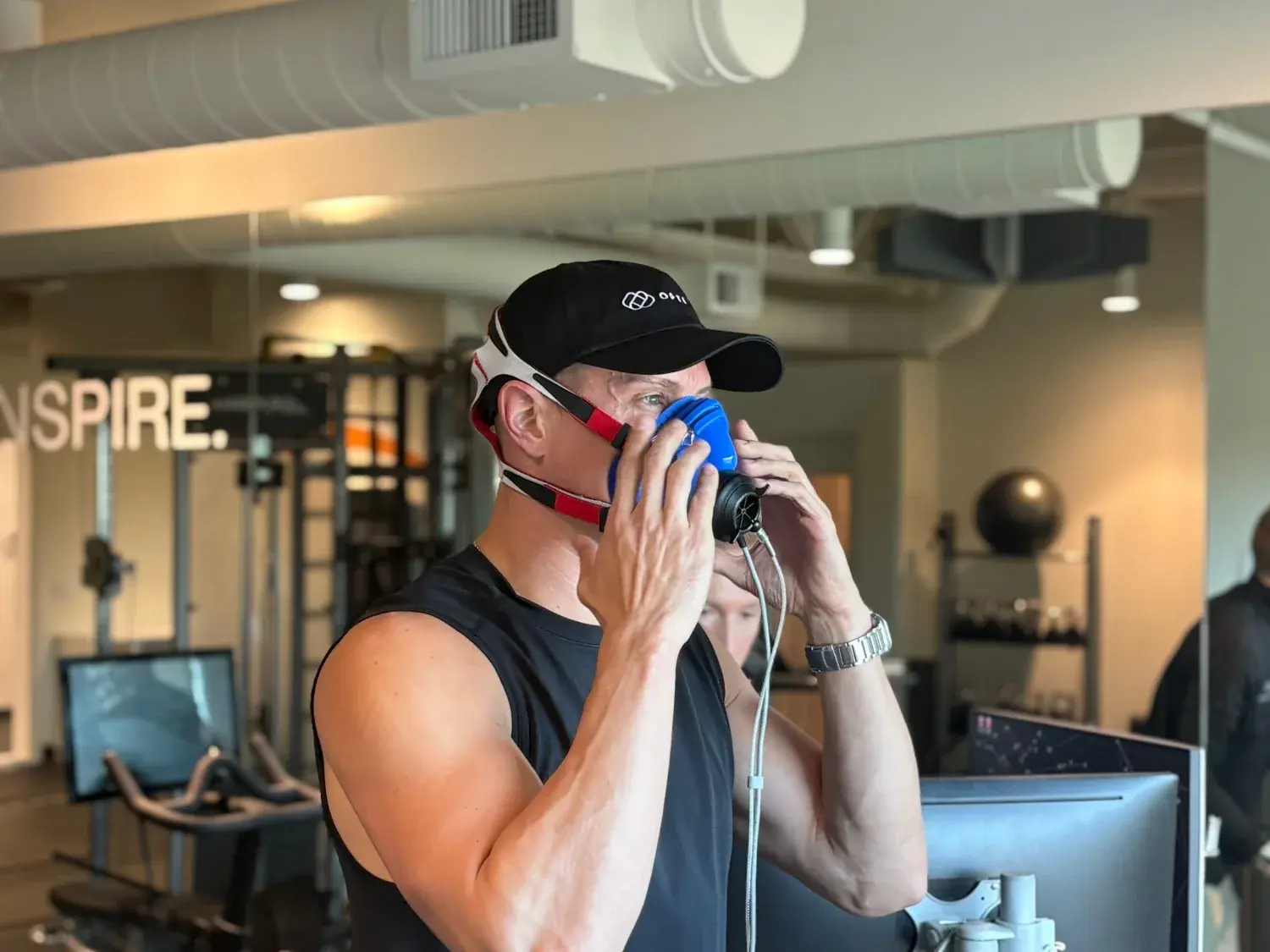
- VO2 max testing to measure cardiorespiratory fitness
- strength, mobility and movement assessments
- a DEXA scan for body composition and bone mineral density
- point-of-care ultrasound and other selected screening tools
More testing isn’t automatically better testing. Every test should have a purpose: we want to know what we’re measuring, why it matters, how reliable the result is, and whether it could change someone’s care.
VO2 max, for example, gives an objective measure of cardiorespiratory fitness, which is strongly associated with long-term health outcomes. A DEXA scan shows body composition and bone density, which shapes conversations about strength, physical function and aging well. Certain blood biomarkers can flag cardiovascular or metabolic risk that a routine panel might miss. Each of these earns its place when it helps us make a better decision.
Step 2: Turn the information into a plan
Getting a lot of tests done is relatively easy. You can order bloodwork, buy a wearable and book assessments on your own. Knowing what to do with the results is harder.
About five weeks after the Gateway Day, clients meet with their physician and healthspan coach to go through their findings. We look at medical history, family history, current health, risk factors and personal goals, then decide which areas deserve the most attention. For one person, that means addressing elevated cardiovascular risk. For another, it’s improving fitness, building strength, or changing nutrition and sleep. Sometimes the best recommendation is to leave something alone rather than order more tests or treatment.
We prioritize the changes most likely to make a real difference, weighing the evidence, the likely benefit and the risks. Clients should leave knowing where they stand, what matters most and what to do next.
Step 3: Measure progress and adjust
We put the most weight on this step. Blood pressure, cholesterol, body composition, fitness and other markers change over time in response to aging, lifestyle and medication, so your care should change with them.
We follow a simple loop: Test → Modify → Retest. We set a baseline, make changes, then measure again to see what moved.
Clients in our Helix program get quarterly labs and physician reviews, ongoing care coordination, direct access to their physician, and nutrition, exercise, sleep and mindset coaching from certified experts in each field. If we’re working on someone’s metabolic health, for example, we don’t recommend a diet change and assume it’s working. We check whether the plan is practical, whether they’re able to follow it, and whether the relevant markers are improving. If something works, we build on it. If it doesn’t, we change course.
No single biomarker captures every outcome that matters, and short-term improvements don’t guarantee long-term results. Repeated measurement, read in the right clinical context, still gives us more information to work with. An ongoing relationship with a physician and a healthspan coach gives you a way to act on the plan, check the results and adjust over time.
Concierge medicine vs longevity medicine at a glance
| Concierge medicine | Optispan (concierge longevity medicine) | |
|---|---|---|
| Primary focus | Personalized access to medical care | Long-term health, risk reduction and performance |
| Physician relationship | Smaller patient panels and more direct access | Physician-led, capped at 50 patients |
| Diagnostics | Routine and preventive testing; extras vary by practice | A full Gateway Day of advanced diagnostics |
| Exercise and fitness | Lifestyle guidance, depending on the practice | VO2 max, body composition and movement assessments |
| Ongoing support | Medical care, coordination and sometimes lifestyle support | Physician oversight, care coordination and healthspan coaching |
| Follow-up | Depends on the practice and your needs | Quarterly testing and reviews in Helix |
| Payment | Membership fee; insurance arrangements vary | Self-pay; no insurance, HSA or FSA |
These are general differences. Some concierge practices offer extensive preventive services, and some longevity practices, including Optispan, offer concierge-style access to the physician.
Can you have both?
Yes, and the two can work well together. You might have a primary care or concierge physician who handles day-to-day needs, acute illness, prescriptions and chronic conditions, and still want a deeper look at your long-term risks, fitness and metabolic health. A longevity program covers that second part.
Many of our clients already have a primary care physician and other specialists. When it’s appropriate, and with the client’s authorization, we exchange relevant medical notes and coordinate with those providers. We want to see what’s already being done well, find any gaps, and focus our time there instead of repeating work. On the consultation call, we’ll go through how Optispan would fit with the care you already have.
Is concierge medicine worth it?
It depends on what you want from your care.
Concierge medicine may fit better if:
- you’re frustrated by long waits and hard-to-get appointments
- you want more time with your physician and easier communication
- you need ongoing help managing medical conditions or coordinating specialists
- your main goal is a better experience of getting care
Longevity medicine may fit better if:
- you want a deeper understanding of your long-term risk factors
- you want to keep your strength, fitness, cognitive function and independence as you age
- you want objective measurements of your health and performance
- you want a physician and coach to help turn recommendations into lasting habits
- you’d rather track changes over time than rely only on periodic checkups
You don’t have to choose one. We combine concierge-style access to your physician with longevity testing, planning and coaching.
Concierge longevity medicine in Seattle
Seattle has a growing number of options for personalized and preventive care. Optispan is a physician-led concierge practice in the Seattle area focused on longevity and preventive medicine. We combine detailed health assessments, medical oversight, ongoing coaching and care coordination.
Our physician takes a maximum of 50 patients. Long visits, careful review of complex results, individual plans and real follow-through all take time, and the cap protects it.
Our goal is better decisions about your health today, so you have the best possible chance of staying healthy and capable in the decades ahead. We can’t promise how long anyone will live, and longevity medicine doesn’t replace evidence-based medical care. We can help you understand your risks, find where you can improve, and take a more deliberate approach to your long-term health.
Explore Optispan’s programs or book a free 15 to 30 minute consultation.
Frequently asked questions
Concierge medicine is a membership model of primary care. Patients pay a fee, and physicians keep smaller patient panels, which allows longer appointments, easier scheduling and direct communication.
It depends on the practice. Some concierge practices bill insurance for covered services and charge a separate membership fee. Others work entirely outside insurance. Optispan is self-pay and does not accept insurance, HSA or FSA payments.
They’re related. Direct primary care usually charges a lower monthly fee that covers routine primary care without billing insurance, while concierge practices vary more in price, services and how they handle insurance.
Concierge medicine describes how care is delivered, with more access, convenience and personal attention. Longevity medicine focuses on understanding long-term health risks, preventing disease where possible, and preserving physical and cognitive function. The two can overlap, and Optispan offers both.
Lifespan is how long you live. Healthspan is how long you stay healthy, capable and independent.
Yes. Optispan is a concierge practice focused on longevity and preventive medicine. Our physician takes a maximum of 50 patients, and clients get direct physician access, care coordination, a full day of diagnostics, a personal plan and quarterly reviews.